| Project | Robot Raiders |
|---|---|
| Studio | Mattorigus Studios |
| Role | Creative Director |
| Disciplines | Creative Direction, Art Direction, Illustration, Marketing Strategy, Advertising, Video Production, Branding |
| Scope | Game visual identity, character development, commissioned artwork, Kickstarter campaign, marketing and audience development |
| Marketing Results | 4,056 advertising clicks, 15.77% landing page conversion rate |
| Status | Physical release discontinued, digital version currently in development |
Robot Raiders is a fantasy-themed, asymmetrical strategy game developed by Mattorigus Studios. Designed for one to four players, it combines tactical combat, character progression and an enormous variety of customisation possibilities to create a highly replayable tabletop experience.
I led the creative direction of the project, helping transform its original concept into a visually distinctive product with the presentation and appeal of a premium trading card game. My work spanned visual development, art direction, illustration, marketing strategy, advertising, video production and crowdfunding.
From establishing the game’s visual identity to developing its promotional campaign, I worked across the creative and commercial sides of the project to build an audience and communicate what made Robot Raiders different.
Although the physical game did not reach commercial release, the project is continuing through development of a digital version.
The Brief
Make an all-in-the-box strategy game feel like a premium trading card game.
Robot Raiders originated as a video game concept before evolving into a physical tabletop experience.
The game was developed by Matthew Bell, drawing on nearly a decade of experience as a product manager for the Yu-Gi-Oh! Trading Card Game. The design combines asymmetrical player-versus-player gameplay with solo play, offering a flexible experience that supports different player counts and approaches to strategy.
One of the central design ambitions was replayability. With more than 5,000 possible combinations of upgrades, loot and augments, Robot Raiders was designed to give players considerable freedom to customise their challenges and develop their own strategies.
The creative challenge was to make this depth immediately appealing to potential players. We wanted the product to feel substantial, collectible and visually exciting, rather than simply looking like a conventional boxed board game.

My role was to establish that identity and carry it consistently across the game itself, its promotional materials and its wider marketing presence.
My Role
Creative Director
I was responsible for defining and delivering the creative direction across the project, working closely with the game designer, external art studios and volunteer contributors.
My responsibilities included:
- Establishing the overall visual identity and creative direction.
- Developing the art direction and commissioning external illustration.
- Creating original character and card artwork.
- Developing the game’s visual lore and supporting style guides.
- Collaborating with Little Devil Company on the illustration pipeline.
- Producing promotional graphics, advertising campaigns and video content.
- Designing the Kickstarter campaign page and supporting creative assets.
- Creating physical marketing materials and event displays.
- Filming and editing developer diaries, gameplay footage and promotional content.
- Designing livestream graphics, layouts and thumbnails.
- Developing and testing advertising creatives across Meta platforms.
I also designed the Mattorigus Studios logo, helping establish a consistent visual identity for the studio alongside the game.

Establishing the Visual Identity
One of the first challenges was deciding what Robot Raiders should look and feel like.
Although the original concept had developed from a video game, we wanted the physical product to occupy a different visual space. The intention was to create something that felt like a premium fantasy trading card game, with strong character artwork, recognisable silhouettes and a world that players would want to explore.


The original creative direction leaned towards darker, more painterly fantasy illustration, taking inspiration from the visual language of games such as Magic: The Gathering. This direction was also explored through alternate artwork created exclusively for crowdfunding backers.


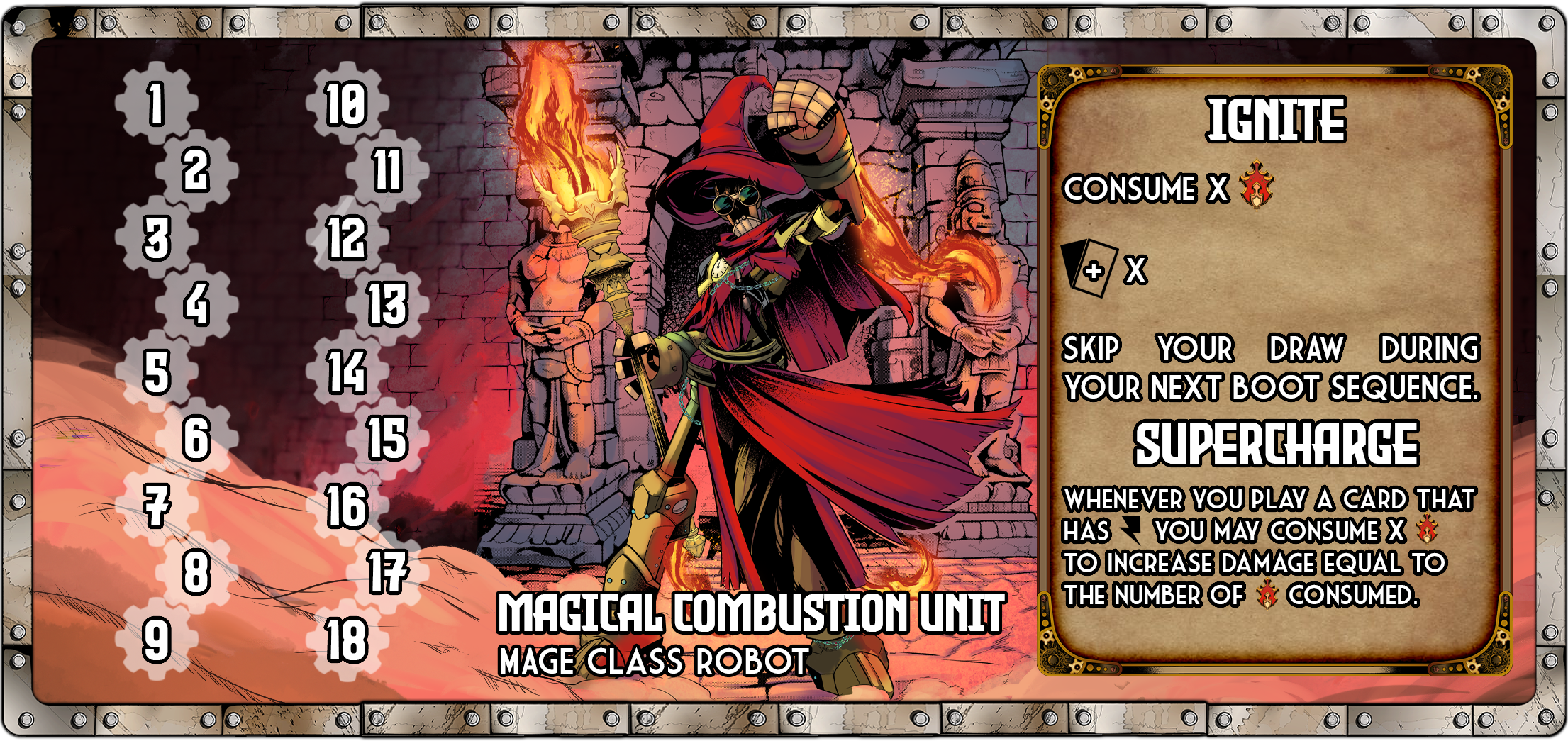
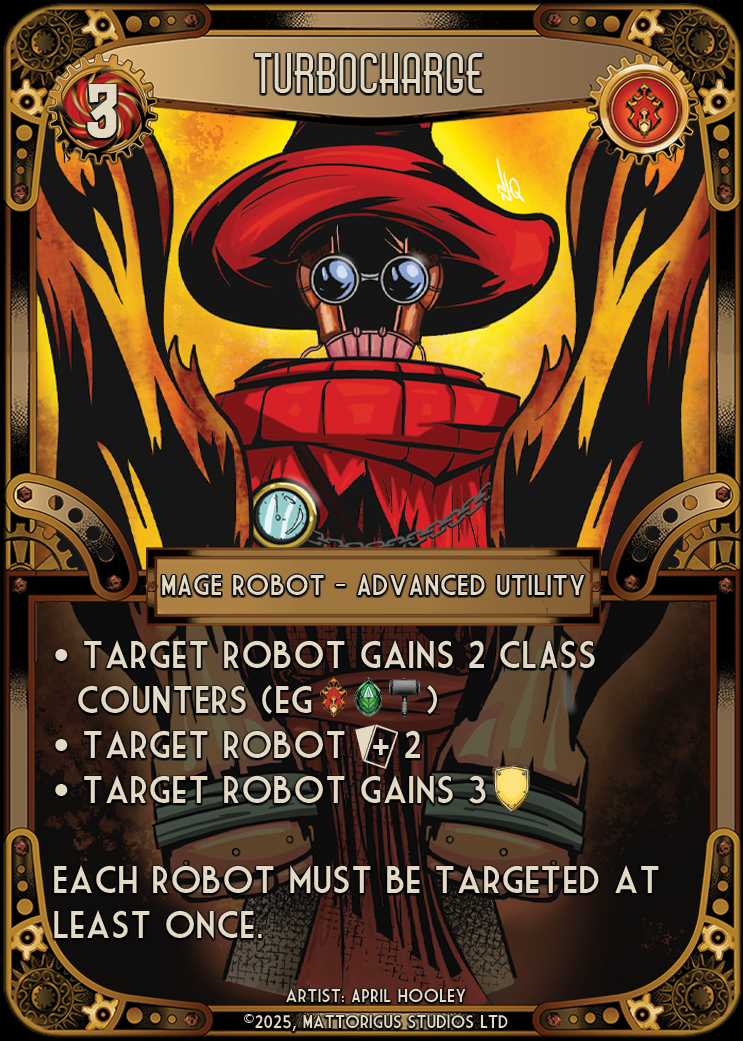
The first major character design was the Mage Robot, a mechanical character wearing an oversized mage’s hat. This established an early creative principle that would guide the project:
Never sci-fi. Always fantasy.
Rather than treating the robotic characters as traditional science fiction machines, we wanted to create a world where fantasy archetypes and mechanical characters naturally coexisted.
Developing the Art Direction
Initially, I researched independent artists through ArtStation to find illustrators capable of delivering the original painterly vision.
However, the realities of working with individual freelance artists presented production challenges. We needed a reliable pipeline that could deliver a consistent volume of artwork within the constraints of an independent studio.
We also maintained a strict no-AI-generated-content policy for the product, so finding the right external creative partners was essential.
This led us to Little Devil Company, an illustration studio based in Brazil.
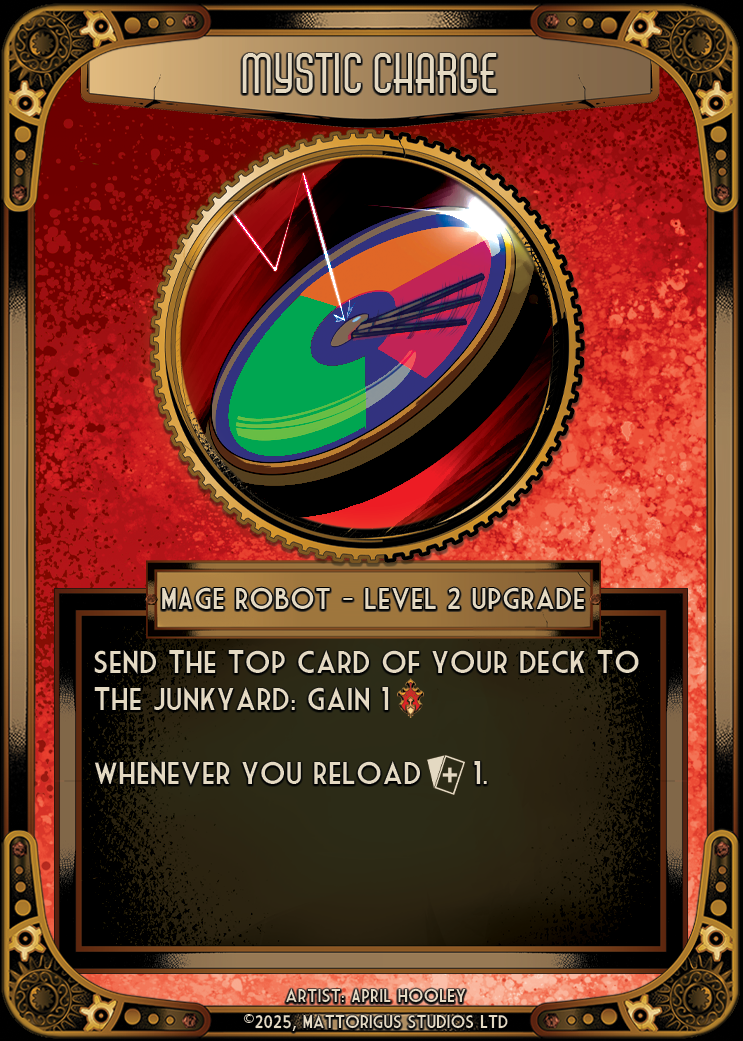
Their interpretation of the original character designs shifted the visual direction towards a more expressive comic-book aesthetic. The result had strong parallels with 1990s anime and series such as Medabots, giving Robot Raiders a more accessible and immediately recognisable personality.
Rather than treating this change as a departure from the original vision, I worked with the studio to develop it into a cohesive visual identity.
We collaborated with artists and volunteers to establish character lore, visual guidelines and a broader style guide. This ensured that new artwork contributed to a consistent world rather than existing as disconnected illustrations.
The revised direction also tested well with players, helping create excitement around the characters and the world they inhabited.
Building the World Through Illustration
The artwork needed to do more than make individual cards look attractive. Each character had to communicate personality, role and place within the wider game world.
I worked across character concepts, card illustrations and visual development, while directing the wider illustration process to ensure consistency between internal and commissioned artwork.
My own contributions included digitally painting numerous cards for the planned physical version, alongside developing the visual language used throughout the product.


The collaboration with Little Devil Company allowed us to establish a more scalable approach to illustration, combining external creative production with internal art direction.
This created a foundation for expanding the game’s card library while maintaining a recognisable style.
Marketing & Audience Development
With the visual identity established and promotional artwork becoming available, the next challenge was introducing Robot Raiders to potential players.
I approached marketing as an extension of the creative direction. The objective was to communicate the experience of playing the game, rather than simply advertising a collection of cards.
I researched successful advertising approaches within tabletop gaming and experimented with different creative formats, audiences and messaging.
Paid Advertising & Creative Testing
I developed and tested multiple advertising creatives across Meta platforms, using A/B testing to understand which visual approaches generated the strongest engagement.


One of the more interesting findings was that showing actual cards performed particularly well with tabletop and card game audiences. However, more character-focused creative also attracted a strong response from tabletop roleplaying communities, particularly Dungeons & Dragons players.
This helped identify different audience segments and demonstrated that Robot Raiders could appeal beyond the traditional board game demographic.
Across the campaign, we achieved:
- 4,056 advertising clicks
- 15.77% average landing page conversion rate
- £4.76 average cost per lead
- Over 50% of landing page converters signing up to the mailing list
- 18% further engaging by joining the Discord community
These results helped validate the visual direction and provided useful insight into how different audiences responded to the product.
Advertising Performance
Some of the strongest-performing creatives included:
| Creative | Cost per lead | Conversion rate |
|---|---|---|
| Meta Ad 1 | £3.09 | 27.69% |
| Fire Rain | £3.24 | 25.00% |
| Podcast #1 | £5.58 | 23.17% |
| Room 4 | £2.42 | 21.50% |
| Meta Ad 4 | £4.24 | 19.23% |
| Mage | £3.31 | 18.97% |
The Room 4 creative achieved the lowest cost per lead among these examples, while the general card-focused advertising approach helped establish a clear connection between the product and its intended audience.
Testing also informed how we presented the game during the crowdfunding campaign, with a stronger emphasis on actual gameplay and physical components.
Video Production & Content Creation
Alongside paid advertising, I developed a content strategy designed to give the project a more personal presence.
For an independent game studio, showing the people behind the product can be just as valuable as showcasing the product itself. We wanted potential players to feel involved in the development process and understand the personalities driving the project.
I filmed and edited developer diaries, promotional videos and gameplay content, working alongside Matt to document the game’s development.
This included:
Developer Diaries
A series of videos introducing Robot Raiders, explaining its mechanics and giving viewers insight into the development process.
Animated Launch Trailer
I collaborated with Little Devil Company and composer Joshua Ginsberg to produce an animated launch trailer, bringing the game’s characters and visual identity together in a more cinematic presentation.
Live Gameplay Content
I created layouts, graphics and thumbnails for livestreams, helping establish a consistent presentation across live demonstrations and community events.
Social Media Content
During our Northern Tour, I documented visits to several tabletop stores across the north of the UK, capturing real people playing the game and interacting with the product. Watch the Northern Tour video on TikTok.
This content helped humanise the studio and gave prospective players a glimpse of the experience beyond the advertising campaign.
Physical Marketing & Events
Robot Raiders needed to make an impression in physical spaces as well as online.
I designed promotional banners that showcased the game’s characters and visual identity, creating large-format displays suitable for events, demonstrations and retail environments.


These were primarily used during the Northern Tour, where we visited several stores across the north of the UK to introduce the game to tabletop communities.
The banners also became backdrops for in-studio content, giving the project a consistent visual environment across physical events and digital media.
This was an important part of connecting the online marketing campaign with real-world player engagement.
Kickstarter & Product Presentation
The crowdfunding campaign was an opportunity to bring together the visual identity, gameplay systems and marketing work into a single product presentation.
I designed the Kickstarter page, developing its layout, graphics and supporting content to communicate the game’s appeal to prospective backers.
Our initial approach borrowed more heavily from digital game marketing, using character splash artwork to introduce the world and its characters.


However, as the campaign developed, we shifted towards a more product-focused presentation.
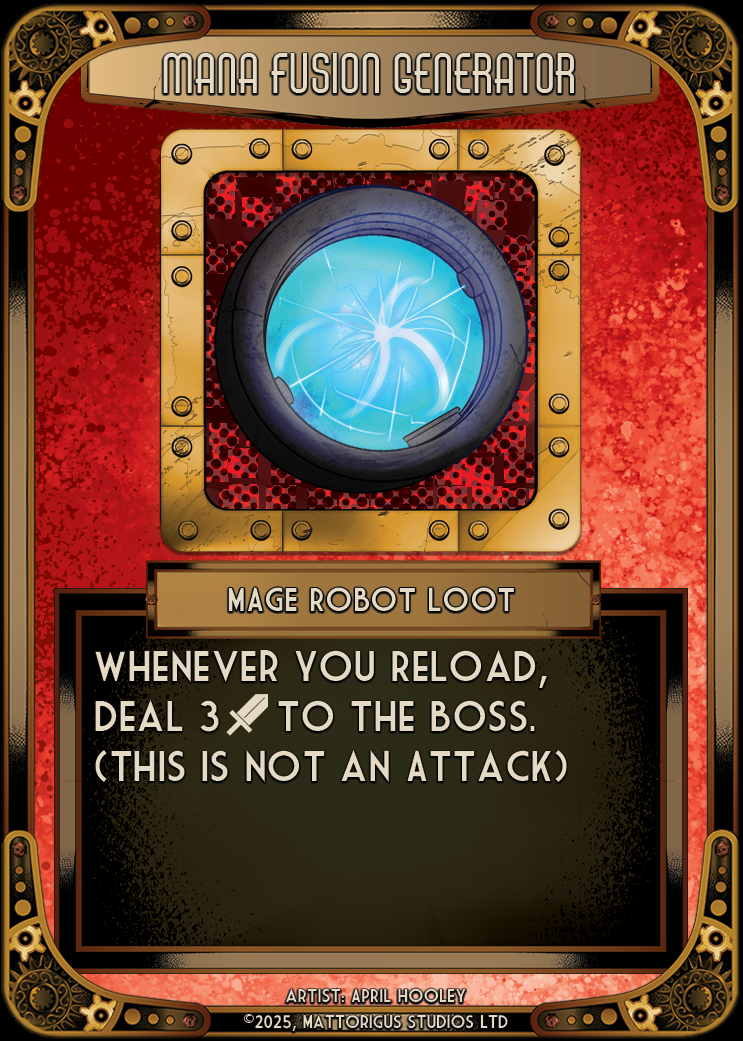
The revised page placed greater emphasis on actual card artwork, physical components and a comprehensive How to Play section. This gave visitors a clearer understanding of what they would receive and how the game worked.
The crowdfunding campaign initially succeeded, but external manufacturing costs and newly imposed US tariffs created an unexpected challenge.
Rather than passing those additional costs directly on to customers, we made the decision to cancel the original crowdfunding campaign and reconsider the manufacturing approach.
This was a commercial decision made to protect the affordability of the product and avoid placing an unreasonable additional cost on backers.
Project Outcome & The Next Chapter
Robot Raiders developed a substantial creative and marketing foundation, bringing together its visual identity, illustration pipeline, promotional strategy and community-building efforts.
The project demonstrated genuine audience interest, with advertising results providing valuable insight into how different creative approaches and communities responded to the game.
The Kickstarter campaign initially succeeded, but rising manufacturing costs and newly imposed US tariffs created an unexpected challenge. Rather than passing those additional costs directly on to backers, we made the decision to cancel the original campaign and reconsider the manufacturing approach.
As a result, the original physical version of Robot Raiders never reached production. However, this was not the end of the project.
Robot Raiders: The Next Chapter
In development
Robot Raiders is now continuing through development of a digital version of the game.
This presents an opportunity to revisit the original concept in a new format, taking the existing creative direction, gameplay foundations and worldbuilding into a digital experience.
The work completed during the tabletop development remains an important foundation for this next chapter. The character designs, visual identity, commissioned artwork and established lore will continue to inform the game’s evolution.
The transition to digital also creates new opportunities to explore how players interact with the game, how its mechanics are presented and how the world can be experienced beyond the limitations of a physical tabletop product.
Project Legacy
Robot Raiders represents an extensive creative development journey, spanning visual identity, character development, art direction, marketing strategy, advertising, video production and audience development.
Although the original physical release did not materialise, the project provided valuable experience in taking an independent game from concept towards market readiness, balancing creative ambition with the practical realities of production and commercial viability.
My contribution extended beyond making artwork or producing marketing materials. I helped shape how the game looked, how it communicated its identity and how it was presented to potential players.
The physical game may not have made it to production, but the creative foundations remain, and Robot Raiders is continuing into its next chapter as a digital game.
Reflection
Robot Raiders was an opportunity to work across almost every aspect of bringing an independent game to market.
It challenged me to think beyond the visual presentation of a product and consider how creative direction could support audience development, commercial positioning and community engagement.
From establishing the visual identity and directing external artists to developing advertising campaigns, producing video content and designing the crowdfunding experience, I was involved in shaping how Robot Raiders was understood and experienced by potential players.
One of the most valuable aspects of the project was learning how to adapt a creative vision to the realities of independent production. The evolution of the art direction, the development of an external illustration pipeline and the decisions surrounding crowdfunding all required balancing ambition with practical constraints.
Although the original physical release never materialised, Robot Raiders continues to evolve through its digital development.
For me, the project represents the importance of creative direction that extends beyond aesthetics: building a recognisable identity, communicating a product’s value and creating the foundations for something that can continue to grow.