| Project | TUN35 Trading Card Game |
|---|---|
| Studio | Harakka |
| Current engine | Galaxy Engine |
| Role | Creative Director & Lead Designer |
| Disciplines | Game Design, Creative Direction, Art Direction, Worldbuilding |
| Scope | Four factions, modular TCG engine |
| Status | Prototype completed, commercial release discontinued |
The TUN35 Trading Card Game was an opportunity to take an existing video game IP and expand its universe into an entirely new medium. Combining strategic gameplay, faction-driven storytelling, original artwork and worldbuilding, I led the development of a trading card game designed to capture the themes and personality of TUN35 while creating an experience players could share around a table.
What began as an unexpected opportunity through voice acting evolved into the design of a complete TCG framework, four distinct playable factions, a prototype visual identity and a modular game engine. That engine, now known as the Galaxy Engine, will continue to be developed and used in future projects by Mattorigus Studios.
Project Background
The project began while I was auditioning as a voice actor for the TUN35 IP. I was cast as Bubbie-Bot, a character within the game’s universe, and through conversations with the Harakka team, discovered they were exploring opportunities to expand TUN35 into tabletop experiences, including card and board games.
TUN35 is a narrative-driven video game about a small mining robot working for the Space-O corporation. Through an unexpected discovery of music, the robot begins to find freedom and develops an identity beyond its corporate purpose.
I saw an opportunity to translate these themes into a social and strategic experience. A tabletop game could give players the opportunity to explore the universe from different perspectives, engage with its factions, and create their own stories through gameplay.
The initial exploration began as a board game concept built using the Robot Raiders engine. However, as the project developed, we recognised that a trading card game would offer greater flexibility for expanding the lore, establishing faction identities and supporting long-term strategic depth.

This became the foundation of the TUN35 Trading Card Game.
My Role
Creative Director & Lead Designer
I led the project from initial concept through to a fully developed playable prototype framework, taking responsibility for the creative direction, game systems, faction design and visual development.
My responsibilities included:
- Establishing the creative vision and design goals for the tabletop adaptation.
- Designing the core trading card game engine over an intensive initial development weekend.
- Building and iterating on the gameplay systems through rapid prototyping and volunteer playtesting.
- Ensuring the initial system could support at least four distinct and strategically viable faction decks.
- Developing faction identities, mechanics and narrative objectives.
- Contributing to the expansion of the TUN35 universe through worldbuilding and character development.
- Producing the majority of the prototype card artwork.
- Designing the card interface and visual information systems.
- Preparing print-ready assets for physical playtesting.
- Creating educational resources and visual direction materials for artists entering the card illustration pipeline.
My goal was to create a system where the mechanics, artwork and narrative all reinforced one another, rather than treating the trading card game as a collection of independent gameplay and visual elements.
Designing the Galaxy Engine
At the heart of the project was the development of a modular trading card game engine.
Rather than designing four separate games, I wanted to establish a shared mechanical foundation that could accommodate very different faction identities without compromising balance or clarity.
The result was a resource-driven strategy system built around planet cards and dedicated resource decks. Players construct faction-aligned decks, manage their resources, deploy allies and events, and compete to establish control across a shared universe.
The system was designed with expansion in mind. Each faction could introduce new mechanics and strategic approaches while remaining compatible with the underlying rules.
One of the key design challenges was ensuring that the factions felt genuinely different to play. I approached this by giving each one a distinct psychological identity:
- Robot Uprising: Cooperation, momentum and technological progression.
- Space-O: Resource exploitation, calculated greed and risk management.
- Suomenmaa: Exploration, resilience and environmental adaptation.
- Grubbers: Recycling, transformation and restorative strategies.
These identities informed everything from individual card abilities to faction-specific victory conditions.
The engine has since evolved into what is now called the Galaxy Engine, which will be carried forward by Mattorigus Studios for use in future game development projects.
Core Gameplay
The TUN35 TCG was designed around two complementary paths to victory, allowing players to pursue either territorial dominance or a unique faction-driven objective.

1. Planetary Control
The primary victory condition revolves around controlling four planets.
Each player begins with a home planet and introduces an additional outer planet aligned with their strategy. Throughout the game, players deploy Allies and activate Events to establish influence and secure control of different locations.
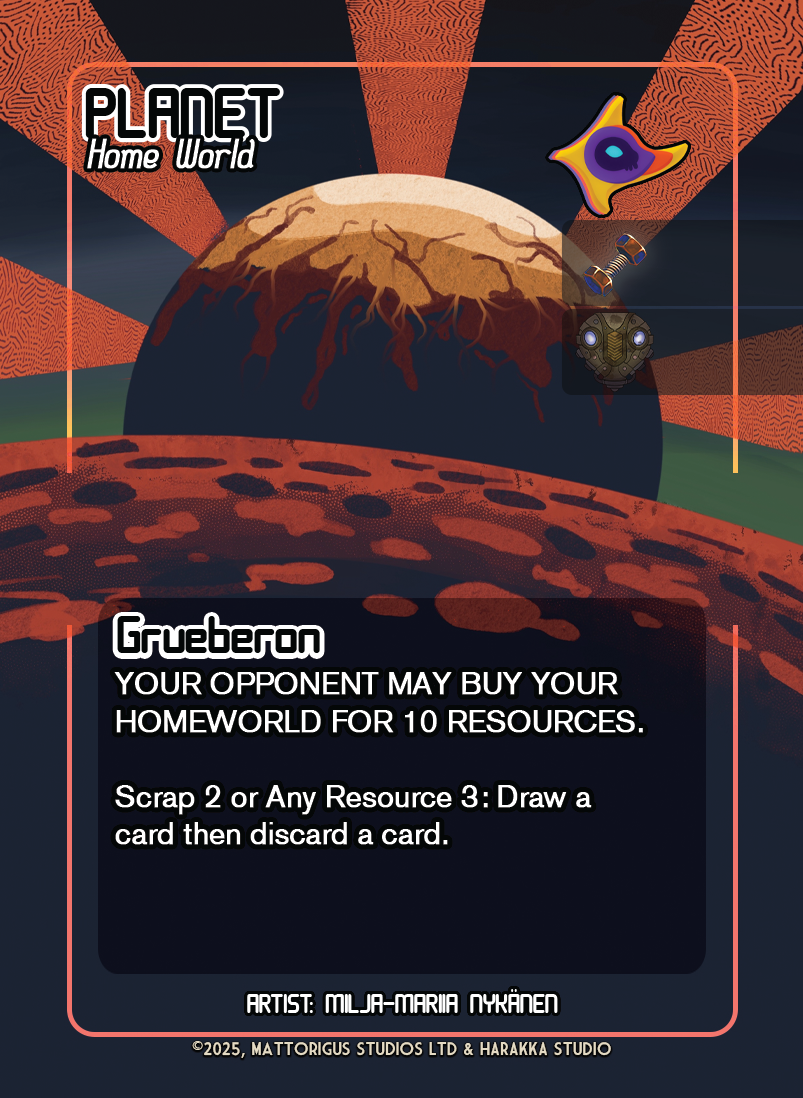
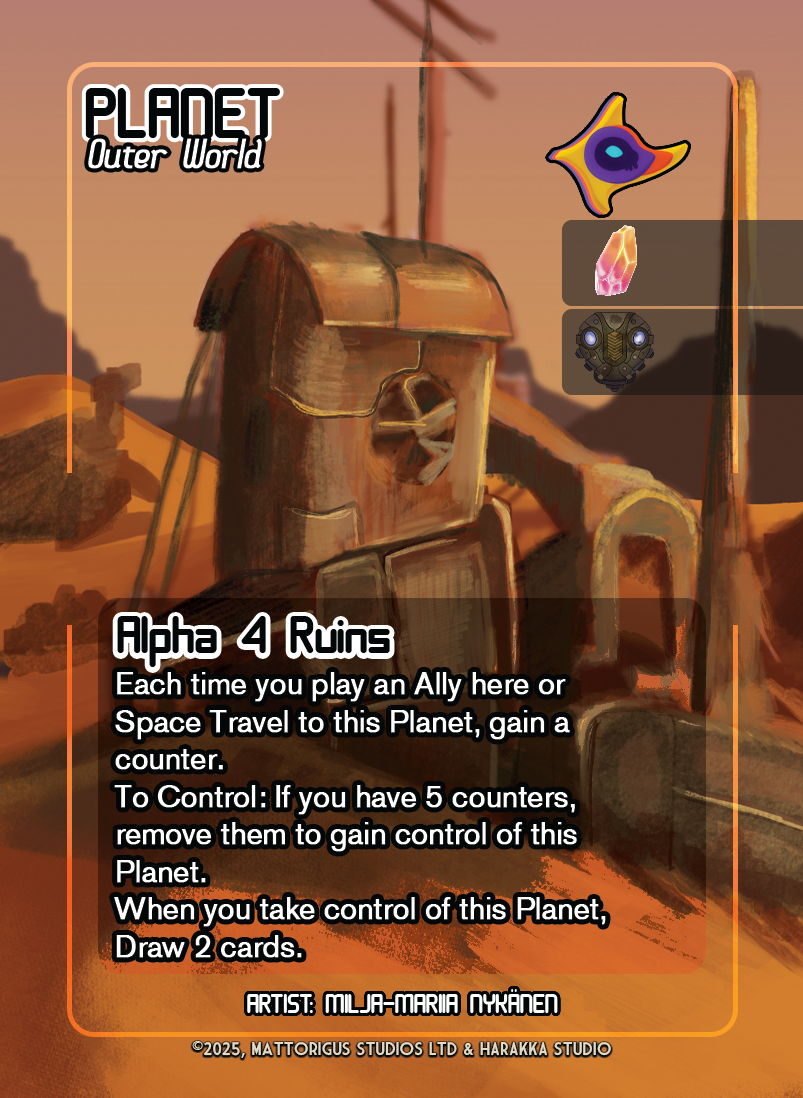
The system encourages players to balance defence, expansion and opportunistic attacks. Once a player controls all planets outside their opponent’s home planet, they can deploy an Ally to that final location, creating an opportunity to complete their planetary domination.
2. Protagonist Objectives
Each player also has a protagonist card that remains active throughout the match.
Rather than simply contributing to combat or resource generation, protagonists introduce an alternative victory condition tied to their individual identity and narrative.
Completing a protagonist’s unique objective triggers an alternate win state.

This creates a second strategic layer, encouraging players to build decks around their character’s goals while forcing opponents to consider threats beyond the immediate planetary conflict.
The dual victory system was designed to support different approaches to play, from territorial control and direct competition to longer-term strategic planning and narrative-driven objectives.
Faction Design & Worldbuilding
A major part of my contribution was translating the themes of TUN35 into four mechanically and narratively distinct factions.
Each faction represents a different relationship with the universe, its resources and the concept of progress.
Robot Uprising
Rebellion · Cooperation · Technological Advancement
The Robot Uprising represents TUN35 and the allied robots fighting to break free from Space-O’s corporate control.
Their gameplay focuses on collaboration, building momentum and combining resources to achieve increasingly powerful technological breakthroughs.
Rather than relying solely on individual strength, the faction rewards players for working towards a shared objective.
Unique Victory Condition: Construct a Mega Sound Cannon powerful enough to defeat Space-O.

Space-O
Exploitation · Greed · Risk Management
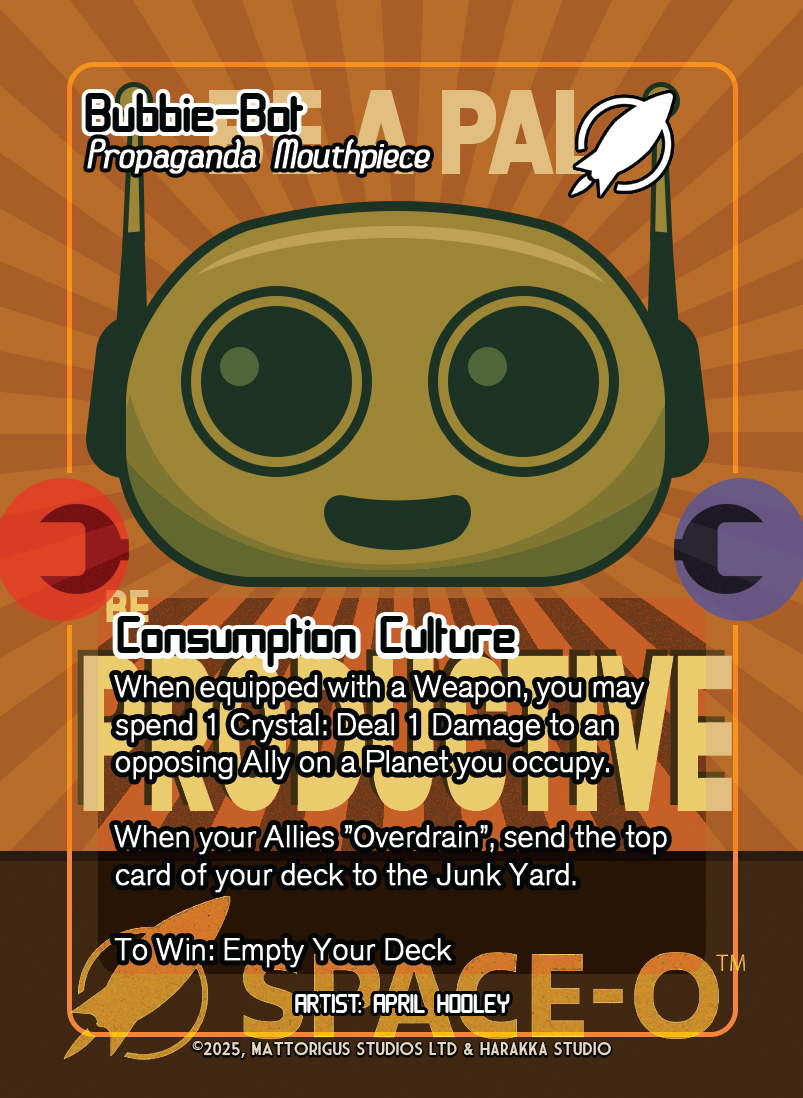
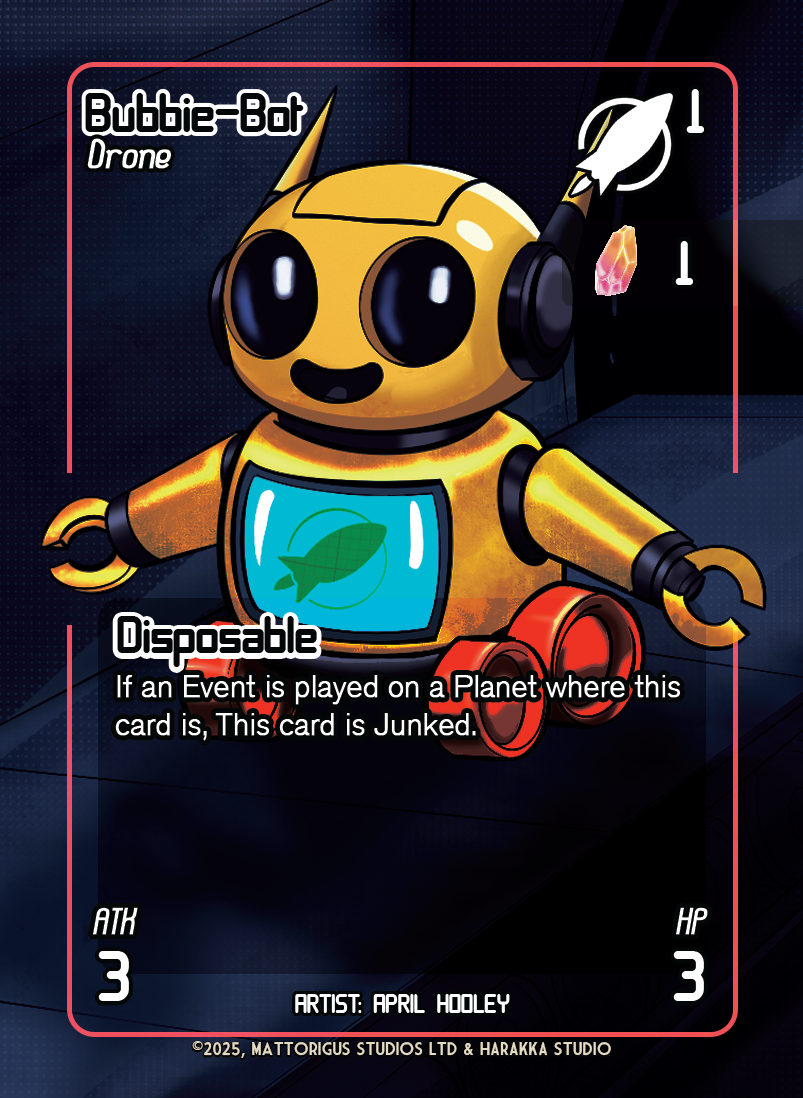
Space-O is a corporate force driven by resource extraction and the belief that the ends justify the means. Its operations span the universe, stripping planets of valuable materials in the name of Earth’s survival.
Mechanically, the faction embraces calculated greed. Players are encouraged to exploit their resources aggressively, but must carefully manage the consequences of their decisions.
Its unusual victory condition reflects this philosophy.
Unique Victory Condition: Empty your own deck.
Space-O’s limited ability to retrieve cards from its Junk Yard means that every resource and card must be used with careful consideration. Players must balance short-term gains against the risk of exhausting their options too early.
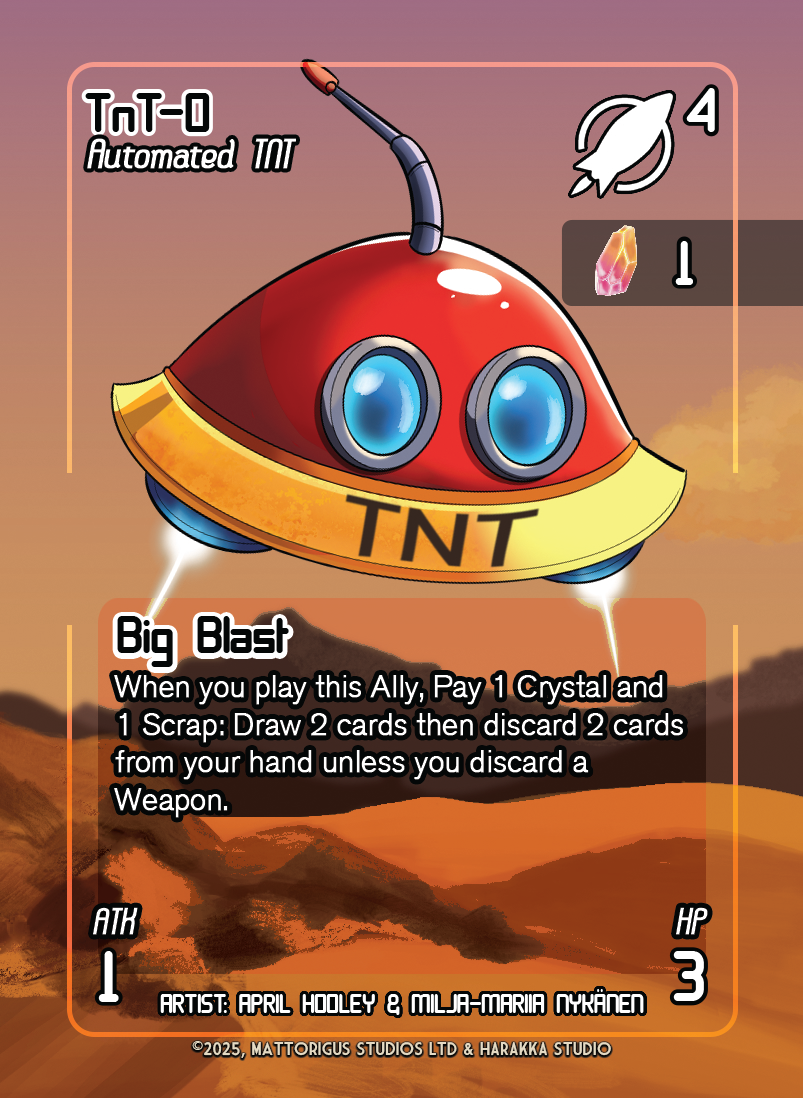
Suomenmaa
Exploration · Resilience · Adaptation
Suomenmaa represents a futuristic Finnish civilisation specialising in survival and settlement across harsh planetary environments.
The faction’s identity is built around exploration and adaptation rather than conventional resource efficiency. Players willingly sacrifice some efficiency in exchange for abilities that activate through discovering and interacting with new planets.
This creates a playstyle that rewards forward planning, environmental awareness and sustained exploration.
I also supported the development of Suomenmaa’s lore, helping establish its place within the wider TUN35 universe.
Unique Victory Condition: Explore planets a set number of times to trigger cumulative faction effects and achieve victory.

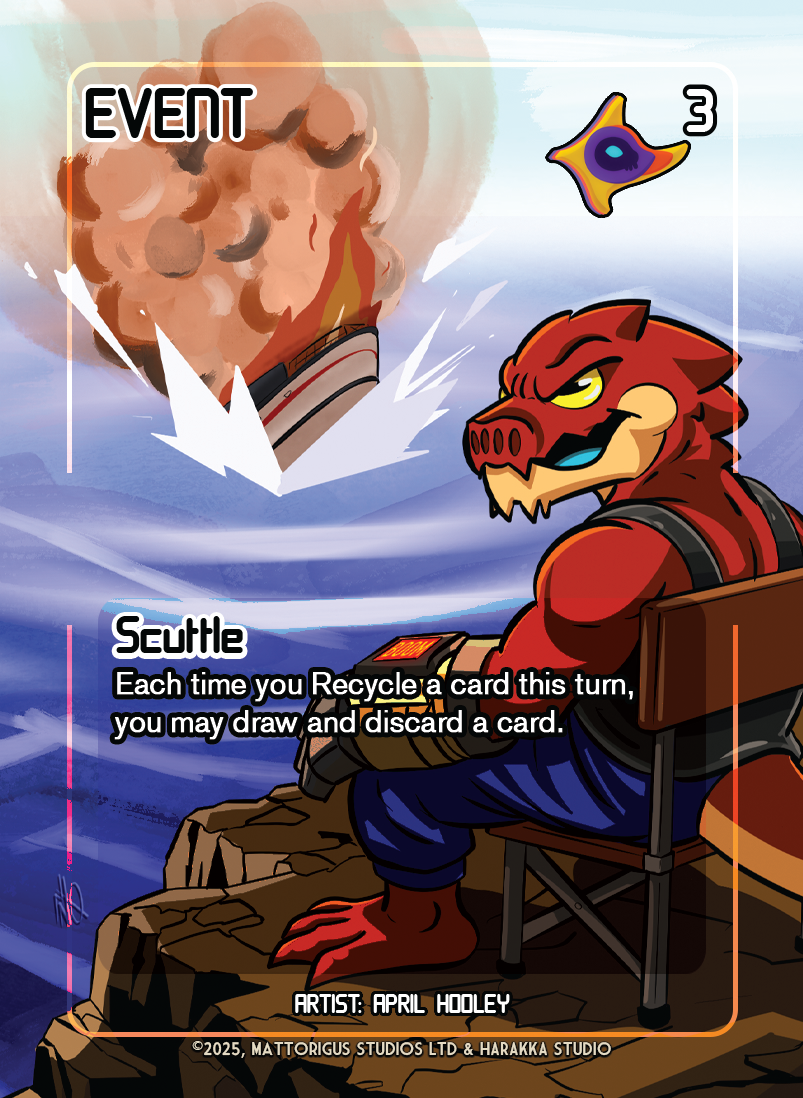
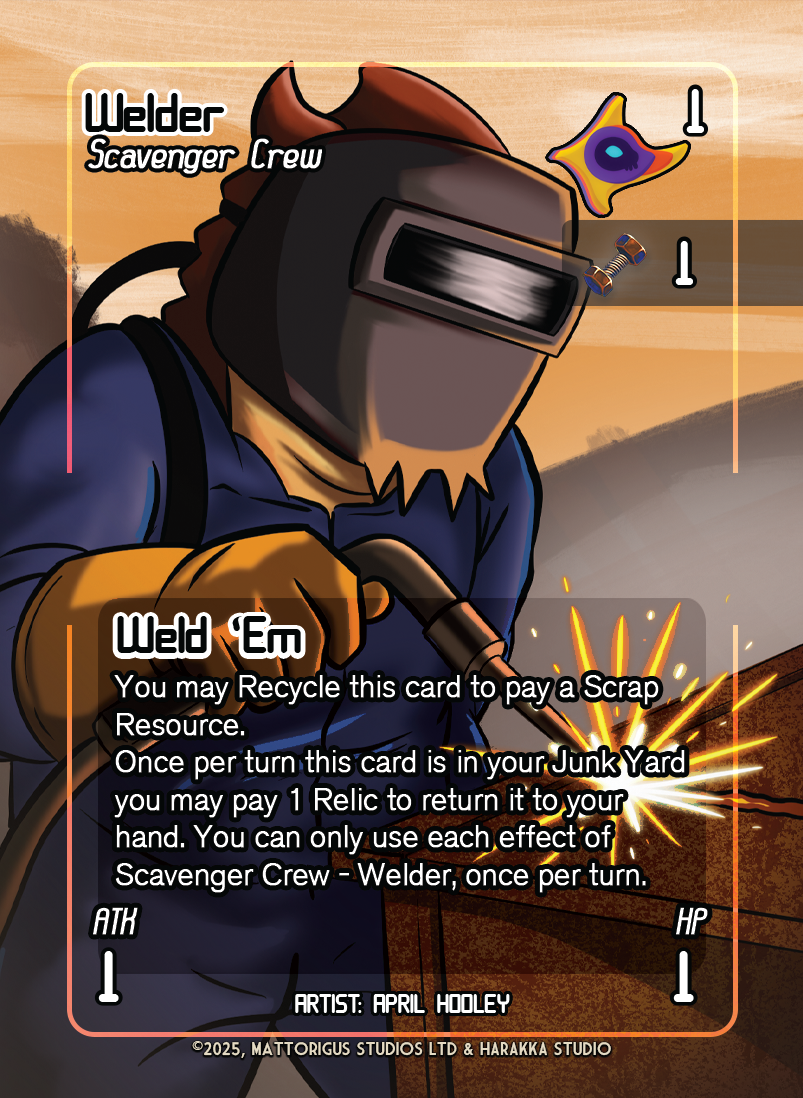
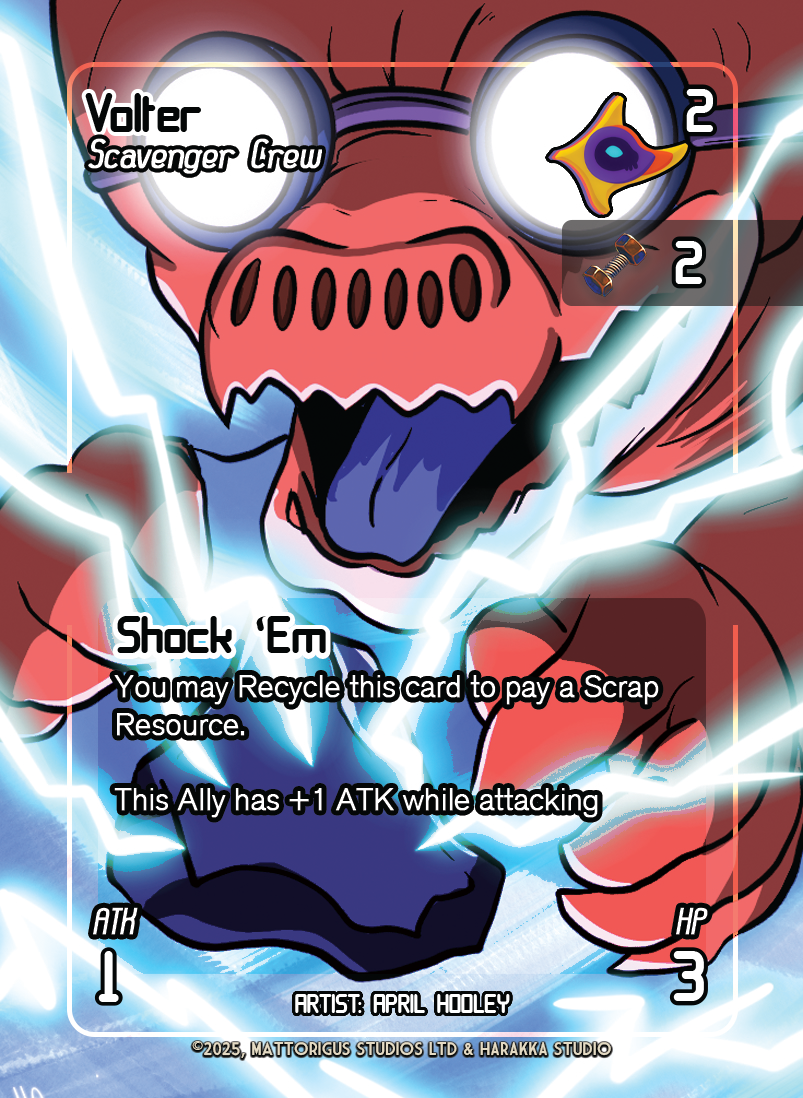
Grubbers
Restoration · Recycling · Transformation
The Grubbers are pacifist alien salvagers who restore worlds devastated by Space-O’s industrial exploitation.
Their philosophy is fundamentally different from the other factions. Rather than competing through direct confrontation, they focus on recovering discarded materials and transforming them into something valuable.
Their gameplay revolves around recycling, resource conversion and long-term planning.
I also contributed to the character design and visual development of the Grubbers, helping establish a distinct identity for the faction.
Unique Victory Condition: Recycle materials to create Titan Ore and forge a powerful relic that secures victory.
Art Direction & Visual Development
Alongside the mechanical design, I led much of the visual development for the prototype.
The objective was to establish a visual language that felt authentic to TUN35 while making the game readable and functional as a physical trading card game.
I produced the majority of the prototype artwork and developed the card UI system, considering both the aesthetic presentation and the practical requirements of gameplay.
This included:
- Card layout and information hierarchy.
- Visual systems for faction identification.
- Presentation of gameplay statistics, abilities and resource information.
- Visual consistency across different card categories.
- Preparation of print-ready files for physical prototyping.
The visual system needed to accommodate four factions with very different personalities while retaining a consistent overall identity. Each faction therefore received its own thematic direction, with shared UI conventions ensuring that players could quickly understand and navigate the cards.
Supporting the Artist Community
I also created an educational slide pack titled Making Art For Trading Cards, designed to introduce artists to the requirements and creative opportunities of trading card illustration.
The resource covered the visual direction and thematic expectations for each faction, helping artists understand how to create illustrations that supported both the worldbuilding and the practical needs of the game.
Download: Making Art For Trading Cards (PDF)
This was an important part of establishing a potential production pipeline, making it easier to onboard additional artists and maintain a cohesive visual identity as the card library expanded.
Systems Design & Playtesting
The game was developed through an iterative process of prototyping, testing and refinement.
A key early milestone was ensuring that the core engine could support at least four viable decks from the outset. This meant that faction identity could be built into the fundamental mechanics rather than introduced later as an additional layer.
Playtesting focused on several key areas:
Faction Viability
Ensuring each faction had a meaningful strategic identity and could compete without relying on the same core approach.
Game Pacing
Evaluating how quickly players could develop their board state, establish planetary control and progress towards their alternative victory conditions.
Mechanical Clarity
Making sure that the resource systems, card interactions and faction-specific objectives were understandable without sacrificing strategic depth.
Strategic Diversity
Encouraging different deck-building approaches and ensuring that players had meaningful decisions throughout a match.
The modular nature of the engine also allowed individual mechanics to be adjusted without requiring a complete redesign of the game.
This approach helped establish a framework that could support future factions, additional cards and potentially entirely new game projects.
Outcome & Project Legacy
The TUN35 Trading Card Game reached the prototype stage, with substantial work completed across game design, faction development, artwork, UI and production preparation.
At the point of the project’s planned next phase, the four initial faction decks had been developed into playable prototypes, and the project was preparing for a larger playtest reveal session in Finland. Discussions with potential distributors were also anticipated as part of exploring production and release opportunities.
However, Harakka subsequently went bankrupt, bringing the planned commercial development of the TUN35 Trading Card Game to an end. The game was never taken through to full production or public release.
Despite this, the project produced something with a life beyond its original IP.
The underlying game engine was retained and has since become known as the Galaxy Engine. Mattorigus Studios intends to use this framework in future projects, carrying forward the modular systems and design principles developed during TUN35.
For me, this is one of the most meaningful outcomes of the project. Although the original game did not reach commercial release, the work was not lost. The experience established a reusable foundation for future tabletop development and demonstrated the value of building adaptable systems rather than designing solely for a single product.
Reflection
The TUN35 Trading Card Game brought together several disciplines that I enjoy working across: creative direction, systems design, narrative development, illustration and visual communication.
It was an opportunity to take an existing creative universe and think about how its themes could be expressed through an entirely different medium. It also challenged me to balance ambitious worldbuilding with the practical requirements of designing a functional, replayable strategy game.
From the initial Robot Raiders-inspired board game exploration to the development of four distinct factions and the Galaxy Engine, the project represents an end-to-end approach to game development.
Most importantly, it reinforced an approach I continue to bring into my work: building creative systems that are greater than the sum of their individual parts, and designing them with the flexibility to evolve beyond their original purpose.